
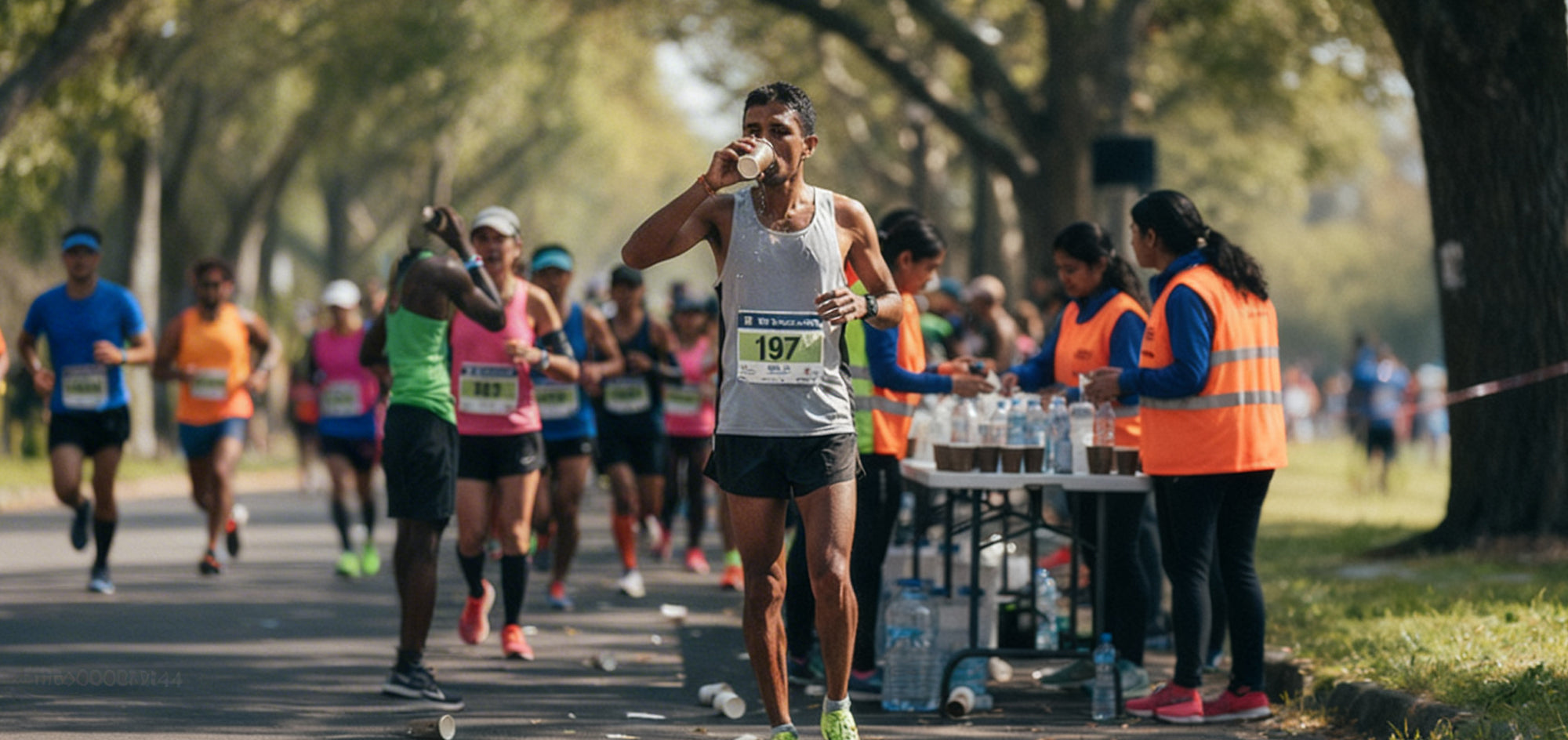
Why knowing your sweat rate is crucial for performance?
When you workout or perform any intense activity, your body temperature rises. This rise in temperature is controlled by the sweat mechanism of the body. As you sweat, you lose fluid and electrolytes. Now these electrolytes are the electrically charged salts present in your body that keep your body moving.
If you do not replenish them during and/or after a workout or a race, it could lead to electrolyte imbalance and you might not be able to perform at the same intensity or won’t be able to perform at all.
Knowing your sweat rate helps you ascertain the quantity of electrolytes and fluids you lose through sweating during a working out and consequently, how to replenish them.
Sweat Rate

Your sweat rate is nothing but the amount of fluid you lose per hour of activity via sweating. To calculate your sweat rate, you will need to know your:
-
Pre-exercise weight: Weigh yourself before you head for your workout
-
Post-exercise weight: Weigh yourself after you are done with your workout
-
Fluid intake during race: The amount of water and/or electrolytes consumed during your workout. This is to be calculated in ml.
-
Urine output: If you take a loo break during your activity, then the amount of urine relieved is the number you are looking for here. This is not as important but will help you get a precise sweat rate.
The Formula
Sweat rate = (pre-exercise weight – post-exercise weight) + fluid intake during race duration – urine output/ activity duration in hours
The result will give you an estimate of the fluid you lose through sweat per hour of activity, that is, your sweat rate.
The difference in weight represents fluid loss (i.e., 1kg loss equals approximately 1L (1,000mL) sweat). After exercising, you should drink more than your total fluid deficit. For instance, if you have lost 1kg or 1,000ml of fluid, replenish it with 1,500ml within an hour after exercise.
After Exercise

To do this, you can mix 2-3 sticks of Ascend electrolytes in 1500 ml of water and sip consistently every 15-20 minutes during and after your workout, especially in hot and humid conditions.
Read more
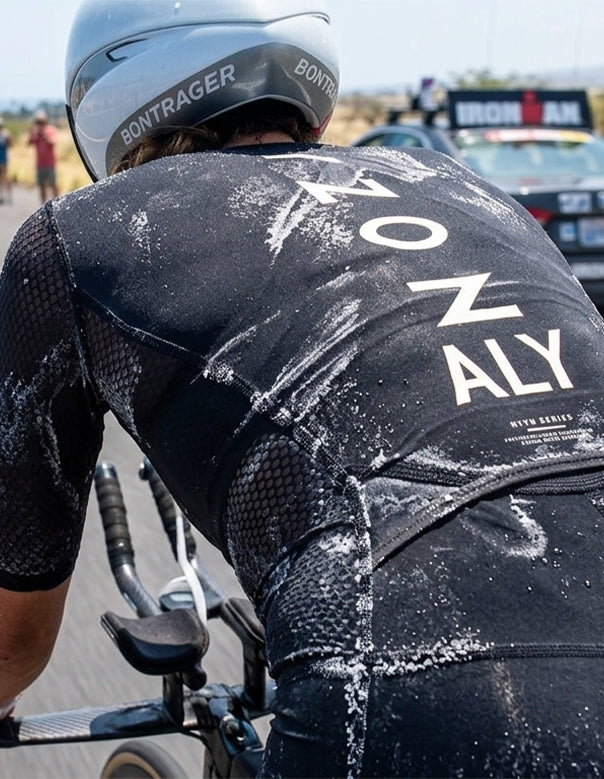
Those white marks on your skin and kit after a run aren't dirt. They're salt — and they're telling you something important about your hydration.

Feeling good at kilometre 10? That's exactly why you should take your gel now — not later. Here's the science behind fuelling before you need it.